State Credentials
Registered Dental Assistant (RDA): What It Takes by State
What Is a Registered Dental Assistant, and How Do You Become One?
A registered dental assistant (RDA) holds a registration or license issued by a state dental board, which lets you work, or use the RDA title, under that state's rules. Of the 17 states with published board rules here, California, Iowa, Minnesota, New York, North Dakota, Texas and Washington issue a general dental assistant registration or license, and each sets its own education route, exam and fee. California's RDA license, for example, has a $120 application fee and a PSI written and law exam.
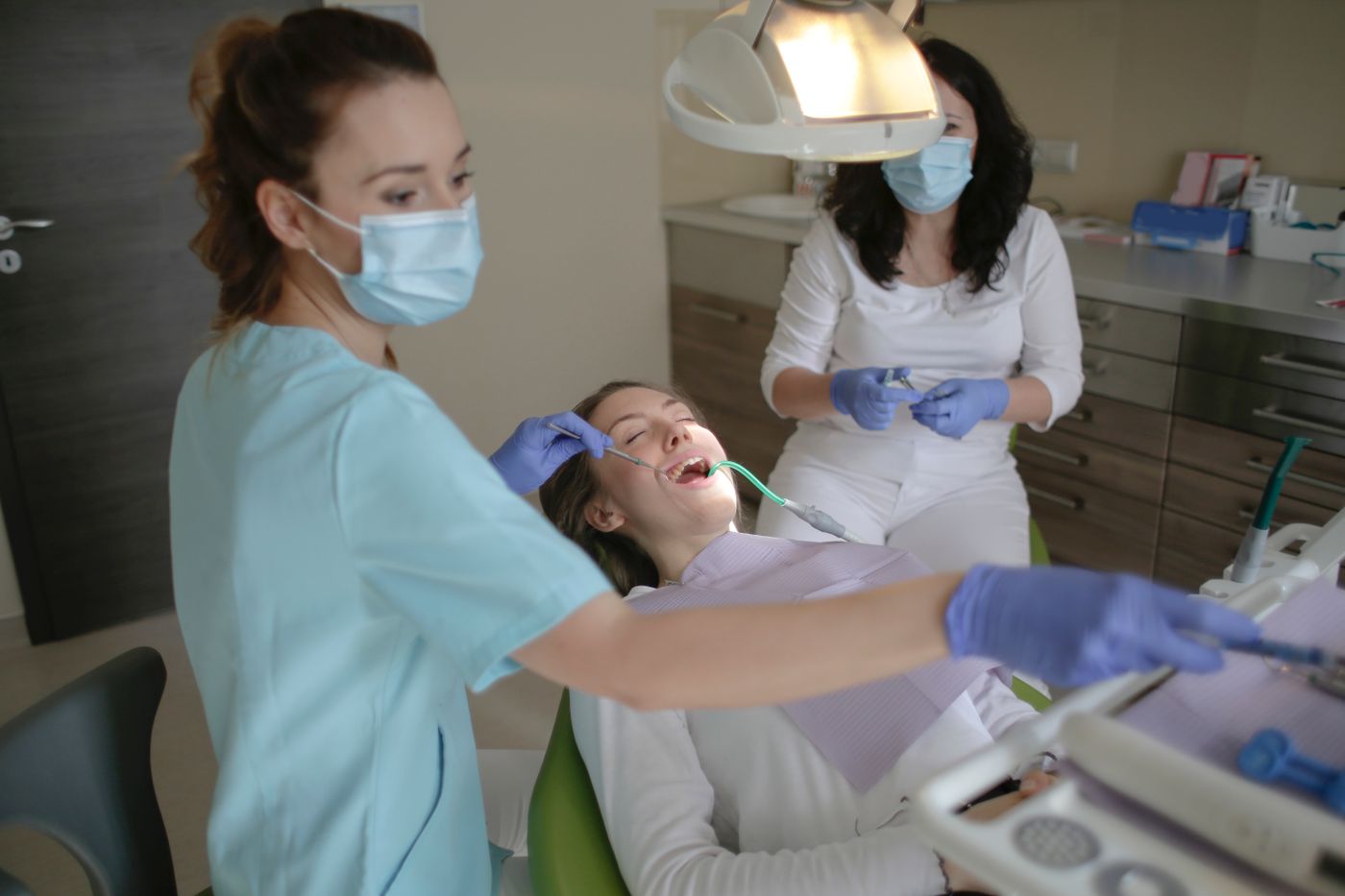
What a Registered Dental Assistant Is
A registered dental assistant is a dental assistant who holds a credential from a state dental board. The word “registered” is the state’s, not a school’s or a national board’s, and that’s the key point. You can’t become an RDA in general. You become one in California, or in Texas, or in North Dakota, under that state’s rules.
The name and the weight of the credential change from state to state. California and New York issue an RDA license. Texas and North Dakota issue an RDA registration. Iowa and Washington register dental assistants under the plain title “dental assistant.” Minnesota licenses them. North Carolina’s board leaves classification to the employer, who rates an assistant as a Dental Assistant I or II.
What doesn’t change is why it matters. BLS notes that each state regulates what dental assistants may do, so the state credential is what decides which duties you can legally take on.
Registered Dental Assistant Rules in the Published States
These are the general dental assistant credentials in the states whose board pages have been read and published here so far:
| State | Credential | What the board asks for | Exam | Fee |
|---|---|---|---|---|
| California | RDA license | Board-approved RDA program, or one of several work, DANB CDA or alternative-program pathways, plus five required courses and BLS | RDA Combined Written and Law and Ethics Examination (PSI) | $120 application |
| New York | RDA license (required to use the title) | High school diploma or GED, licensure-qualifying program or equivalent, age 18 | $103 licensure and first registration | |
| Texas | RDA registration | Renewal every 2 years with 12 CE hours and BLS | Radiology certificate exam for x-rays | |
| Minnesota | Dental assistant license | CODA-accredited, board-approved Minnesota program (exam route) | Minnesota Jurisprudence and DANB certification exams | |
| North Dakota | RDA registration | Board-accredited or approved program within one year, or one of three other pathways | North Dakota jurisprudence exam | |
| Iowa | Dental assistant registration | Accredited program or trainee training in a dental office | Infection control and hazardous materials, jurisprudence, and radiography if taking x-rays | |
| Washington | Dental assistant registration | Required before working after graduation | $40 application, $25 renewal | |
| North Carolina | DAI or DAII (employer classification) | DAII: CODA program, DANB CDA exams, military program, hygiene school year, or 3,000 hours as a DAI plus two courses |
Blank cells mean the board page used for this table doesn’t set that item for the credential. For any other state, check the requirements hub, where new states are added as their boards’ rules are read.
California’s RDA License, Step by Step
California has the most detailed RDA rules of any published state and the most programs: 47 of the verified programs are in California. Here’s the route the Dental Board of California lists:
- Qualify through one pathway. A board-approved RDA program certificate is the main one. The others are at least 15 months and 1,280 hours of dental assisting work, education plus experience adding up to the same, a current DANB CDA, an alternative program of at least 500 hours of didactic and lab work plus 300 clinical hours, or an active RDH license.
- Finish the required courses. Radiation safety (32 hours, within 10 years), coronal polishing (12 hours) and pit and fissure sealants (16 hours, both within 5 years), the Dental Practice Act (2 hours) and infection control (8 hours, both within 2 years), plus current BLS.
- Apply and pass the exam. The application fee is $120 with no separate initial license fee, and the RDA Combined Written and Law and Ethics Examination is given by PSI. Exam and Live Scan fees are paid separately.
New application requirements under SB 1453 took effect July 1, 2025, so older guides you find may be out of date.
Board-approved programs bundle the required courses. Mt. Diablo Adult Education in Concord includes Radiation Safety, Infection Control, Dental Practice Act, Coronal Polish and Pit and Fissure certificates in its 8-month, $7,632 program. Hacienda La Puente Adult Education is CODA-accredited, lists 360 clinical hours and publishes tuition of $2,585. Sacramento City College reports a 90% RDA exam pass rate (18 of 20) for 2024-25.
New York, Texas and Minnesota Compared
New York treats RDA as a protected title. You need the license to call yourself a Registered Dental Assistant. The education is a licensure-qualifying program, either a one-year program of 24 semester hours or an alternative the board lists, with dental radiography in the content. New York also offers a limited permit for $40.
Texas registers RDAs and renews every 2 years. Renewal takes 12 continuing education hours, at least 6 of them clinical, a human trafficking prevention course approved by Texas HHSC and current BLS CPR. Separately, you need the Dental Assistant Radiology Certificate to position or expose x-rays. Tarrant County College publishes $1,850 in total tuition and fees for its Registered Dental Assistant certificate (2026-27, in-county), and Houston Community College reports a 100% exam pass rate in each of the last three years.
Minnesota licenses dental assistants, and its exam route is the one most tied to accreditation: graduate after September 2004 from a Minnesota program that is both CODA-accredited and board-approved, then pass the Minnesota Jurisprudence Examination and a DANB certification exam within 5 years before applying. Hennepin Technical College lists the $60 jurisprudence exam and $125 board application among its extra costs.
States That Register, License or Certify Dental Assistants
| State | Credential | Education or exam | Fee |
|---|---|---|---|
| California requirements | Registered Dental Assistant (RDA) license | Board-approved RDA program certificate, or an alternative pathway the board lists; RDA Combined Written and Law and Ethics Examination (PSI) | $120 nonrefundable application fee; no separate initial license fee; exam and Live Scan fees paid separately |
| Iowa requirements | Dental Assistant (registration) | Accredited dental assisting program, or on-the-job training; Board-approved exams in infection control and hazardous materials, Iowa jurisprudence, and dental radiography (only if the applicant intends to take x-rays) | |
| Minnesota requirements | Dental Assistant (licensure) | CODA-accredited, Board-approved Minnesota dental assisting program (exam route); Minnesota Jurisprudence Examination and DANB Certification Exam, both within 5 years before applying | |
| New York requirements | Registered Dental Assistant (license) | High school diploma or GED plus a licensure-qualifying dental assisting program or equivalent | $103 for licensure and first registration; $40 limited permit (nonrefundable) |
| North Carolina requirements | Dental Assistant I and Dental Assistant II (employer-classified) | ||
| North Dakota requirements | Registered Dental Assistant (RDA) registration | Dental assisting program accredited or approved by the board, or alternative pathway; Jurisprudence exam on North Dakota dental laws and rules, passed within one year of application; CPR or BLS course within two years | |
| North Dakota requirements | Qualified Dental Assistant (QDA) | ||
| Texas requirements | Registered Dental Assistant (registration) | ||
| Washington requirements | Dental Assistant (registration) | $40 application; $25 renewal (WAC 246-817-99005) |
The general dental assistant credential in each published state, as its dental board describes it, November 2026.
Iowa, North Dakota, Washington and North Carolina
Iowa registers dental assistants and keeps two doors open: graduate from an accredited program, or train in a dental office until your supervising dentist judges you clinically competent. Either way you pass board-approved exams in infection control and hazardous materials and Iowa jurisprudence, plus radiography if you’ll take x-rays. Kirkwood Community College reports 19 of 19 graduates passing the Iowa exams in August 2024.
North Dakota issues an RDA registration through four education pathways. The main one is a board-accredited or approved program completed within one year of applying. You also pass a jurisprudence exam on North Dakota dental law and hold a CPR or BLS course from the last two years. Registrations expire December 31 of even-numbered years.
Washington requires registration before you work as a dental assistant after graduation, though students in an accredited program don’t need to register while they train. The fee is $40 to apply and $25 to renew.
North Carolina works differently from every other state here. The board doesn’t certify assistants. Your employer classifies you as a Dental Assistant I or II. To qualify as a DAII you need unexpired CPR plus one of these: a CODA-accredited dental assisting program, one school year in a CODA-accredited hygiene program, the military dental assisting program at the Medical Education and Training Campus, the DANB CDA exams, or two years (at least 3,000 hours) as a DAI in the last five plus a 3-hour sterilization and infection control course and a 3-hour dental office emergencies course. Radiographs need their own training: at least seven hours of x-ray instruction and seven clinical, unless you’re a DANB CDA or a graduate of an accredited program.
RDA vs CDA: Do You Need Both?
The RDA is a state credential. The CDA is DANB’s national certification, earned by passing three exams (General Chairside, Radiation Health and Safety and Infection Control). In some states, one feeds the other. California accepts a current DANB CDA as an RDA pathway. Minnesota’s license requires a DANB exam. North Carolina counts the DANB CDA exams toward its DAII qualification.
Whether you need both depends on where you’ll work. If your state’s RDA route runs through DANB, you’ll earn the CDA on the way. If it doesn’t, the CDA is still portable across state lines in a way an RDA isn’t. The dental assistant certification guide covers the DANB side.
Moving to Another State as an RDA
An RDA stays with the state that issued it. If you move, you start over with the new board, though some make it easier. Minnesota offers licensure by credentials to assistants licensed in good standing in another U.S. jurisdiction who are CODA graduates or DANB certified and pass the DANB exams. Iowa accepts dental assisting under a licensed dentist in another state within the past five years as a training route. North Dakota lists an out-of-state license with experience as one pathway.
Before you move, read the new state’s board page, and if it’s one of the published states, run it through the requirements checker.
How to Choose an RDA Program
- Match the state. A California board-approved RDA program prepares you for California’s exam, not Texas’s. Look for the state named in the program’s exam line.
- Check board approval or CODA. Minnesota’s exam route needs both. California lists board approval as the main pathway.
- Compare totals, not rates. California RDA programs publish figures as far apart as Hacienda La Puente’s $2,585 tuition, Mt. Diablo’s $7,632 program cost and Riverside County Office of Education’s $16,900.
- Look for a dated RDA pass rate. Sacramento City’s 18 of 20 is the kind of figure to ask other schools for.
- Count the courses included. In California, programs that include the five required courses save you enrolling in them separately.
Start with the California ranking, the Texas ranking or the school finder, and compare programs with the cost comparer.
Frequently Asked Questions
Is a Registered Dental Assistant the Same as a Certified Dental Assistant?
No. RDA is a state credential from a dental board. CDA is DANB's national certification, earned by passing the General Chairside, Radiation Health and Safety and Infection Control exams. Some states accept the CDA toward their RDA: California lists a current DANB CDA as one RDA pathway.
Can You Get an RDA License Through Work Experience?
In California, yes. The Dental Board of California accepts at least 15 months and 1,280 hours of dental assisting work as one pathway to the RDA license, along with the required courses in radiation safety, coronal polishing, sealants, the Dental Practice Act and infection control.
Do You Need to Be an RDA to Work as a Dental Assistant in New York?
New York requires the license to use the title Registered Dental Assistant. The license needs a high school diploma or GED, a licensure-qualifying dental assisting program or equivalent, and a minimum age of 18. The fee is $103 for licensure and first registration.
How Often Do You Renew a Texas RDA Registration?
Every 2 years. The Texas State Board of Dental Examiners asks for 12 continuing education hours with at least 6 clinical, a Texas HHSC-approved human trafficking prevention course and current BLS CPR from the AHA or Red Cross.
Do Dental Assisting Students in Washington Need to Register?
Not while they're students in an accredited program, according to the Washington Department of Health. After graduation, you must register before working as a dental assistant. The application fee is $40.
Does a Background Check Come With the RDA Application?
In some states. California's RDA, RDAEF and permit applications include one (Live Scan fees are paid separately), and Minnesota's dental assistant license does too.
Keep Reading
- How to Become a Dental AssistantThe training, the DANB and state exams and the state credentials that take you from no experience to working chairside
- Dental Assistant CertificationWhat dental assistant certification means, the DANB exams programs prepare for, and the pass rates schools publish
- Expanded Functions (EFDA)What an expanded functions dental assistant does, which states credential the role and where to train
- Dental RadiographyThe state rules for taking dental x-rays as an assistant: certificates, courses and exams
- Certificate vs Diploma vs DegreeHow dental assisting certificates, diplomas and associate degrees differ in length, cost and what they lead to
- Dental Assistant School CostWhat dental assistant school costs, from the program totals schools publish, what they leave out and how to pay
- How Long It TakesHow long dental assisting programs take, by credential, from the lengths schools publish
- Best Dental Assistant SchoolsEvery verified program, ranked
- Dental Assistant Requirements by StateEvery published state credential
Sources
- Dental Board of California: Registered Dental Assistant
- NYSED Office of the Professions: Registered Dental Assistant license requirements
- Texas State Board of Dental Examiners: dental assistant renewal
- Minnesota Board of Dentistry: new applicants
- North Dakota Board of Dental Examiners: RDA registration
- Iowa Dental Board: dental assistant registration
- Washington WAC 246-817-190: dental assistant registration
- North Carolina State Board of Dental Examiners: dental assisting
- State dental boards' dental assistant pages, read November 2026