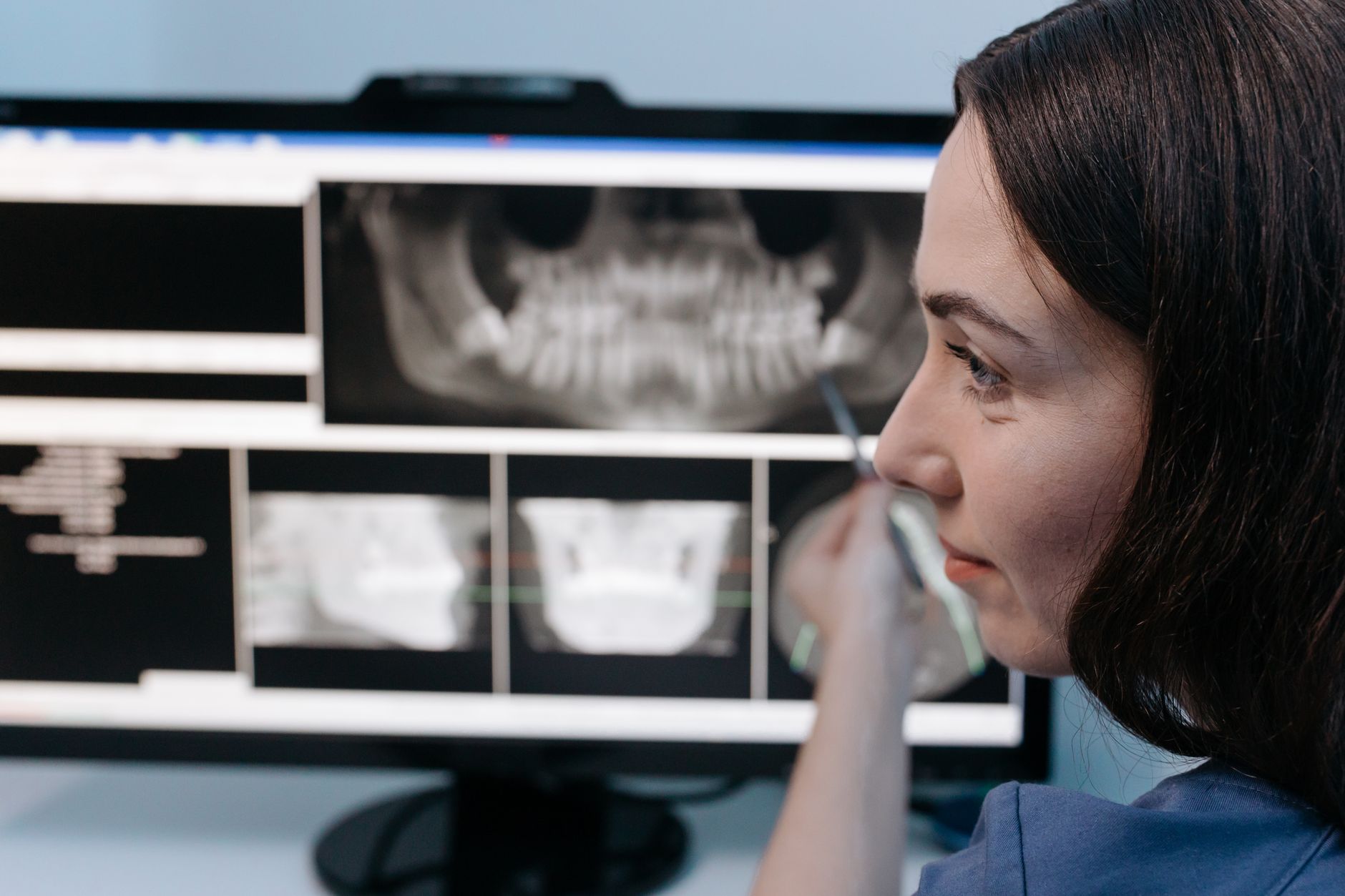
What Online Dental Assistant Programs Really Are
Dental assisting is hands-on work. You pass instruments, manage suction, take x-rays and set up operatories, and none of that can be learned through a screen. So when a school advertises online dental assistant programs, it means the lectures and theory move online while labs, radiography practice and an externship stay in person.
That’s still useful. Hybrid study cuts your commute, lets you do coursework around a job, and often comes with evening or weekend lab sessions. This ranking covers 78 such programs at 71 schools in 31 states. 74 are hybrid, mixing online and on-campus work. 20 state CODA accreditation, and 28 name a DANB exam.
Here are the ten highest-scoring:
| Rank |
School |
State |
Credential |
Format detail |
CODA |
| 1 |
Western Iowa Tech Community College |
IA |
Diploma, two semesters |
On campus and hybrid |
Yes |
| 2 |
Washtenaw Community College |
MI |
Certificate, 35 credits |
4 credits virtual, 31 face to face |
Yes |
| 3 |
Lake Area Technical College |
SD |
Diploma, 11 months |
On campus or hybrid |
Yes |
| 4 |
Central Oregon Community College |
OR |
Certificate, one year |
Hybrid |
Yes |
| 5 |
Eastern Florida State College |
FL |
Diploma, 50 credits |
Hybrid evening track |
Yes |
| 6 |
Herzing University-Minneapolis |
MN |
Associate, 68 credits |
Hybrid, weekend labs |
Yes |
| 7 |
Century College |
MN |
Diploma |
Hybrid, day |
Yes |
| 8 |
Southeast Community College |
NE |
Associate, 60 credits |
On campus and hybrid |
Yes |
| 9 |
Clover Park Technical College |
WA |
Associate, five quarters |
Hybrid |
Yes |
| 10 |
Houston Community College |
TX |
Associate, 60 credits |
On campus and hybrid |
Yes |
The score weighs published outcomes, CODA status, cost, federal awards and schedule flexibility. Public colleges dominate the top because they publish more of those facts.
How Much of Each Program Happens Online
Programs split their time very differently, so ask for the breakdown:
- Washtenaw Community College in Ann Arbor puts 4 dental credits online and 31 face to face. Its in-district rate is $99 per credit, and the college estimates $3,564 to $3,762 in tuition and fees for 2026-27 with the prerequisite course.
- Access Careers in Hempstead and Islandia, New York, lists 600 hours online and in the classroom plus a 300-hour internship, over 7.5 months in the day or 9 months in the evening.
- Herzing University-Minneapolis runs lab and clinical work one or two weekends a month on its hybrid associate track.
- Amerion College in Huntington, West Virginia, delivers its associate degree coursework online, with online fees of $125 per class.
- Compu-Med Vocational Careers Corp in Hialeah, Florida, combines online and on-campus study over about 45 weeks with a mandatory in-person externship in a dental office.
The more online a program is, the more you’ll need to plan for the in-person parts: where the labs are, how often you travel, and where your externship will be.
The Hours You’ll Spend in Person
The externship is the part no hybrid program can move online, and the hours vary more than you’d expect. Compare them program by program:
- Access Careers: a 300-hour internship.
- Pima Medical Institute: an externship of 180 to 240 hours, depending on the campus, after 280 to 284 class hours and 200 to 336 lab hours.
- Charter College in Anchorage: a 180-hour externship in a dental facility, in a certificate that takes as little as 10 months.
- UEI College: a 170-hour externship at an approved site.
- American Career College in Anaheim, Los Angeles and Ontario, California: 160 clinical hours on top of 340 theory hours and 320 lab hours, with weekend scheduling.
- Unitech Training Academy in Louisiana: a 60-hour externship.
College programs describe clinical time by setting rather than hours. Athens Technical College in Georgia places students at two to three practicum sites in local dental offices, and Gulf Coast State College in Panama City, Florida, trains students in its own dental clinic and in local dental offices.
More supervised hours mean more practice with real patients before your first job. If a program’s externship is short, ask how many lab hours come before it.
CODA-Accredited Hybrid Programs
If you want DANB’s CDA right after school, CODA matters. The CDA is the RHS, ICE and GC exams taken together, and graduating from a CODA-accredited program makes you eligible under Pathway I. Otherwise Pathway II asks for at least 3,500 hours of approved work experience.
All of the top ten are CODA-accredited. A few stand out for the reader studying around a job:
- Eastern Florida State College posts a 100% DANB pass rate in 2024 and 2025, and its hybrid evening track takes 16 months.
- Lake Area Technical College in Watertown, South Dakota, reports 100% placement and an average salary of $49,212.80 six months after graduation. Its 2026 first-year estimate is $13,988 on campus or $14,996 hybrid, covering tuition, fees, uniforms, tools, books and a laptop.
- Central Oregon Community College in Bend graduates students with Oregon EFDA and EFODA certification. See the Oregon requirements.
- Manatee Technical College in Bradenton, Florida, runs an 11-month hybrid diploma where DANB exams are taken in the last month, with Florida expanded functions and dental radiographer certificates. It lists an estimated $6,042.60 for tuition, lab and fees.
- J Sargeant Reynolds Community College in Richmond, Virginia, offers over 300 hours of clinical training at $187.60 per credit in-state.
The CODA-accredited programs ranking lists all 143, hybrid or not.
Private career schools run many of the hybrid programs, often with frequent starts:
- Porter & Chester Institute in Connecticut: a 10-month hybrid diploma, day or evening, with first-attempt DANB RHS and ICE exam fees covered by tuition.
- MedQuest College in Louisville: a hybrid diploma that includes radiation safety, EDDA and RDA certificates.
- UEI College: a hybrid diploma at 13 California campuses with a 170-hour externship, leading to the California RDA. See the California requirements.
- Pima Medical Institute: a hybrid certificate in Mesa, Phoenix and Tucson with a 180- to 240-hour externship.
- High Desert Medical College in Lancaster, California: 34 weeks by day or 42 by evening, with a 160-hour clinical externship.
- Fortis College-Centerville in Ohio: a 12-month hybrid diploma with DANB RHS and ICE exam costs included in tuition.
These programs often prepare you for DANB’s RHS and ICE exams or a state credential rather than the full CDA, which suits states where those are the first credentials you need.
What Hybrid Programs Cost
Only two online or hybrid programs publish a full total: National Career College in California at $17,298 tuition, and Amerion College at a full-time maximum of $16,750 with textbooks included. Most others post a rate or a range:
- Washtenaw: $99 per credit in-district.
- Century College: $261.43 per credit for 2026-27.
- Minnesota West Community and Technical College: about $3,794 per semester for its three-semester diploma.
- Ogden-Weber Technical College in Utah: estimated tuition of $2,600 plus $270 in materials.
- Southeast Community College: estimated tuition of $7,620 for the associate degree, plus $400 in supplies and fees and $1,000 for books.
Public hybrid programs are usually far less expensive than private ones. The school cost comparer puts two side by side.
Your State Still Decides What You Can Do
An online program doesn’t change which state’s rules apply to you. The dental board where you’ll work decides whether you need registration, a license, a radiography credential or an expanded-functions certificate. A program in another state may not lead to your state’s credential.
Rules for 17 states have been checked against each dental board’s own pages so far, including Florida, Minnesota and Washington. For other states, start at the dental assistant requirements page and the requirements checker.
Who a Hybrid Program Suits
- You work full time and want to study theory at night, with labs scheduled on set days or weekends.
- You live far from campus and want to cut the number of trips. Plan around the externship, though, since it’s in person.
- You learn well on your own and can keep pace with online modules without a classroom schedule.
A hybrid program suits you less if you need a lot of hands-on repetition early, or if you can’t travel to labs on the program’s schedule.
Questions to Ask an Online Program
- How many hours are online and how many in person? Get it by course.
- Where are the labs and how often? Weekly, monthly or in blocks?
- Where will the externship be, and how many hours? Can the school place you near home?
- Is it CODA-accredited? Check CODA’s own program search.
- Does it lead to your state’s credential? Especially if the school is in another state.
Use the school finder to see hybrid programs within driving distance, or compare them with evening options on the evening and weekend ranking.