Career Guide
How to Become a Dental Assistant
How Do You Become a Dental Assistant?
To become a dental assistant, you finish a dental assisting program (most take about a year), then meet your state dental board's rules, which can mean a registration or license, a radiography credential and exams such as DANB's. Of the 430 programs verified on schools' own pages, 143 state CODA accreditation and the median stated length is 40 weeks. Start with the state requirements so you train for the credential your state uses.
What a Dental Assistant Actually Does
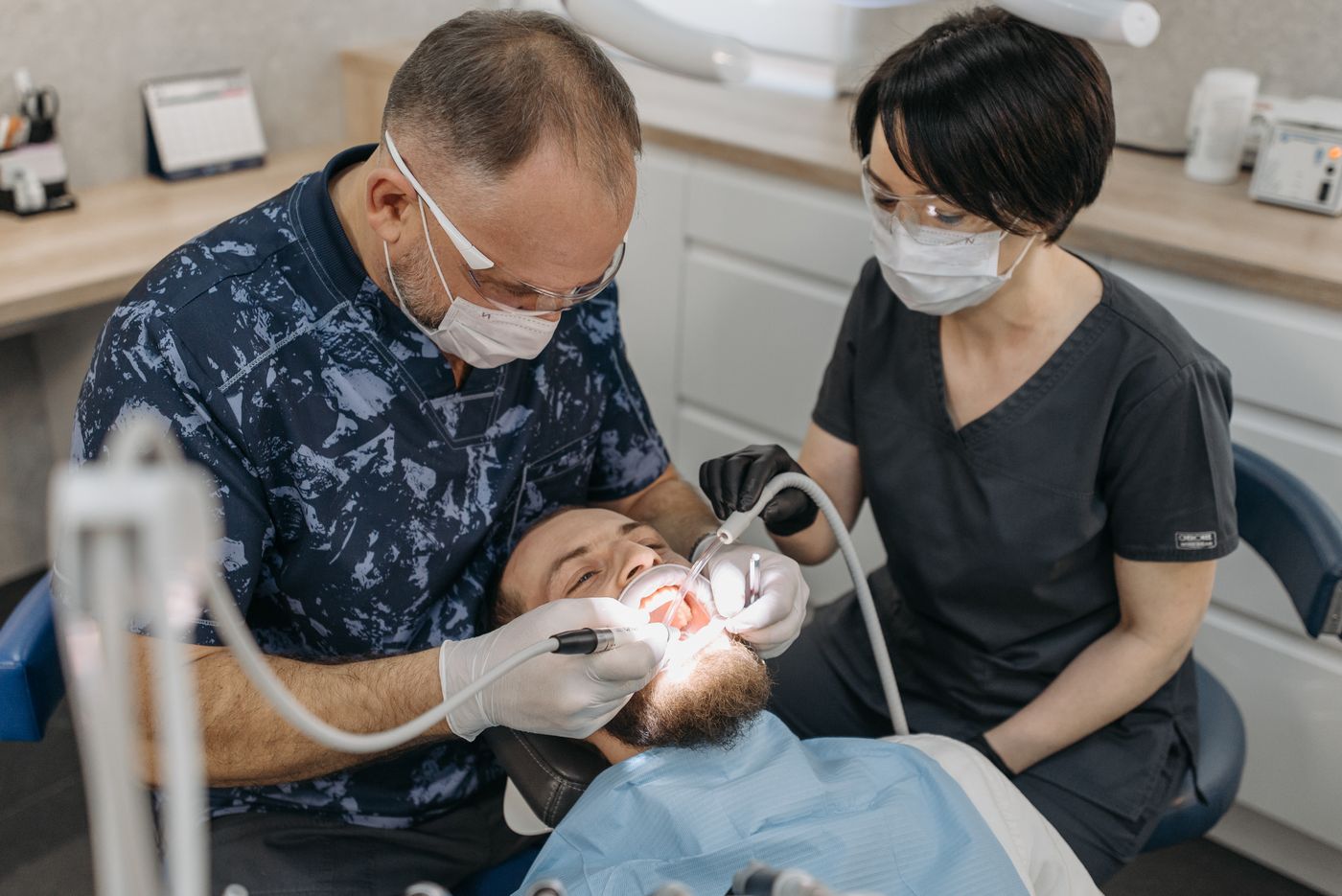
Dental assisting is chairside work. You seat the patient, set up the room, pass instruments to the dentist, keep the mouth dry with suction, and break down and sterilize everything once the patient leaves. Then you do it again. The Bureau of Labor Statistics also lists processing x-rays under the dentist’s direction, teaching patients how to brush and floss, keeping treatment records, scheduling appointments and working with patients on billing.
So it’s a mix of clinical and front-office work, and almost all of it happens in dentists’ offices. BLS puts 91% of dental assistants there, and most work full time.
What you’re allowed to do beyond the basics depends on your state. Taking x-rays, polishing teeth, placing sealants and restorative work are each controlled by the state dental board, and that’s why the route to the job differs from one state to the next.
How to Become a Dental Assistant, Start to First Job
The order matters here, because the credential you need decides which program is worth your money.
- Look up your state’s rules first. Read your state’s page on the dental assistant requirements hub. In Minnesota, for example, the license-by-exam route runs through a CODA-accredited, board-approved Minnesota program, so a non-accredited course would cost you that route.
- Choose a program that fits the credential. Certificates and diplomas take under a year at most schools. Associate degrees take about two. The best dental assistant schools ranking scores every verified program on outcomes, CODA status, cost and schedule.
- Finish the clinical hours. CODA-accredited programs must include at least 300 clinical practice hours within a minimum of 900 instructional hours, spread over two or more offices or clinics.
- Pass the exams your state names. That might be DANB’s Certified Dental Assistant exam, a radiography exam, or a state written and law exam such as California’s RDA exam.
- Apply for the state credential, then the job. Some states register or license you. Others ask only for a radiography permit or course before you take x-rays.
Certificate, Diploma or Degree: Which Program Gets You There
Of the 430 verified programs, 173 are certificates, 149 diplomas and 66 associate degrees. The rest don’t name an award type. For most people chasing a first job, a certificate or diploma is the fast route. An associate degree adds general education, which matters if you might move into hygiene or teaching later. The certificate vs diploma vs degree guide covers the trade-off in depth.
Here’s how a handful of real programs line up, all taken from the schools’ own pages:
| Program | Award | Length or size | Accreditation or approval | Exam route the school names |
|---|---|---|---|---|
| Broward College | Applied Technology Diploma | 12 months, daytime | CODA | DANB CDA, 97% pass rate in 2024-25 |
| Hawkeye Community College | Diploma | About 1 year | CODA | Iowa radiography, infection control and jurisprudence exams, 16 of 16 passed |
| Mt. Diablo Adult Education | Certificate | 8 months | Dental Board of California approved RDA program | California RDA exam |
| Tarrant County College | Certificate | 25 credits | Texas RDA | |
| Coastal Alabama Community College | Associate (AAS) | Five semesters | CODA | DANB ICE, RHS and General Chairside |
A blank cell means the program page doesn’t state that item.
Tarrant County’s certificate publishes a total of $1,850 in tuition and fees (2026-27, in-county), the lowest program total among the verified programs. Mt. Diablo publishes $7,632. Broward and Hawkeye publish their pass rates, which most schools don’t.
Why CODA Accreditation Changes Your Options
The Commission on Dental Accreditation (CODA) accredits dental assisting programs, and 143 of the 430 verified programs state that they hold it. You can work as an assistant without a CODA program in many places, so why care?
Because several routes run through it. DANB’s CDA Pathway I is simply graduation from a CODA-accredited program plus current CPR. Without one, Pathway II asks for 3,500 hours of approved work experience first. Minnesota’s license-by-exam route needs a CODA-accredited Minnesota program. North Carolina counts a CODA-accredited program toward its Dental Assistant II qualification, and a graduate of one may take radiographs without a further exam. Washington’s expanded function license starts with a CODA program or one of a few alternatives.
If your state is one of these, CODA status is the first filter. The CODA-accredited programs ranking lists all 143.
The Route to Your First Dental Assisting Job
- Choose a dental assisting program: 430 verified, 143 stating CODA accreditation, with a median stated length of 40 weeks.
- Check what your state dental board requires: a registration or license, a radiography credential or exams, depending on the state.
- Take the exams your state or employer asks for, such as DANB's.
- Start work and plan your next credential: dental assistants earn a median of $48,070 (BLS, May 2025).
What Each State's Dental Board Requires
| State | Credentials |
|---|---|
| How to become a dental assistant in California | Registered Dental Assistant (RDA) license; Registered Dental Assistant in Extended Functions (RDAEF) license; Orthodontic Assistant Permit; Dental Sedation Assistant Permit |
| How to become a dental assistant in Florida | Dental Radiographer Certificate |
| How to become a dental assistant in Georgia | Expanded Duty Dental Assistant (certificate per course) |
| How to become a dental assistant in Iowa | Dental Assistant (registration) |
| How to become a dental assistant in Minnesota | Dental Assistant (licensure); Limited Radiology Registration |
| How to become a dental assistant in New York | Registered Dental Assistant (license) |
| How to become a dental assistant in North Carolina | Dental Assistant I and Dental Assistant II (employer-classified); Radiography qualification |
| How to become a dental assistant in North Dakota | Registered Dental Assistant (RDA) registration; Qualified Dental Assistant (QDA); Qualified Dental Assistant, Limited Radiology Registrant (QDA-LRR) |
| How to become a dental assistant in Ohio | Dental Assistant Radiographer Certificate |
| How to become a dental assistant in Oregon | Dental assistant certifications (radiologic proficiency, expanded functions) |
| How to become a dental assistant in Pennsylvania | Expanded Function Dental Assistant (EFDA) certification |
| How to become a dental assistant in South Carolina | Radiation safety training for taking radiographs (Reg. 39-16) |
| How to become a dental assistant in Texas | Registered Dental Assistant (registration); Dental Assistant Radiology Certificate |
| How to become a dental assistant in Virginia | Dental Assistant II (registration) |
| How to become a dental assistant in Washington | Dental Assistant (registration); Expanded Function Dental Auxiliary (EFDA) license |
| How to become a dental assistant in Wisconsin | Expanded Function Dental Auxiliary (EFDA) certification |
| How to become a dental assistant in Wyoming | Radiograph permit and pit and fissure sealant permit |
From each state dental board's own pages, read November 2026. Other states are being checked and will be added.
The Exams After Training: DANB, NELDA and State Tests
DANB’s Certified Dental Assistant (CDA) exam is three exams taken together: General Chairside (GC), Radiation Health and Safety (RHS) and Infection Control (ICE). It runs 245 questions in 195 minutes. You need current hands-on CPR, BLS or ACLS for every pathway.
DANB’s NELDA (National Entry Level Dental Assistant) is built for people starting out. It combines RHS, ICE and DANB’s AMP exam, and you can qualify with a postsecondary program, a Job Corps program, a DANB-accepted high school program or 300 to 3,000 hours of work.
State exams sit on top of those. California’s RDA license needs the RDA Combined Written and Law and Ethics Examination through PSI. Minnesota’s license needs the Minnesota Jurisprudence Examination and a DANB certification exam, both within 5 years before you apply. Iowa’s registration needs board-approved exams in infection control and hazardous materials, Iowa jurisprudence and, if you’ll take x-rays, radiography.
174 verified programs name a DANB exam they prepare you for. The certification guide compares the pass rates schools publish.
What Your State Dental Board Requires
Rules for 17 states are published on this site so far, each read from the dental board’s own pages. A few examples show how far apart they are:
- California licenses Registered Dental Assistants. You qualify through a board-approved program, 15 months and 1,280 hours of work, DANB CDA or another listed pathway, plus courses in radiation safety, coronal polishing, sealants, the Dental Practice Act and infection control. The application fee is $120. See California’s requirements.
- Texas requires a Dental Assistant Radiology Certificate before you position or expose x-rays, through a TSBDE-approved course and exam. See Texas’s requirements.
- Florida issues a Dental Radiographer Certificate after a board-approved course and 3 months of on-the-job training under a Florida dentist, with a $35 application fee. See Florida’s requirements.
- Washington requires registration before you work as an assistant after graduation, with a $40 application fee.
The requirements checker pulls up any of the 17 states in one step. For a state not yet published, use your dental board’s site directly.
Can You Train While Working Full Time?
Yes, but the choice narrows. 43 of the verified programs offer evening, weekend or part-time schedules, and 74 are hybrid. Eastern Florida State College runs a hybrid evening track that takes 16 months instead of 14 and still posts a 100% DANB pass rate for 2024 and 2025. Porter and Chester Institute in Bridgeport offers day and evening hybrid sessions that start regularly.
Online coursework only goes so far, though. Hybrid and online programs still put you in a dental office for clinical training: Compu-Med Vocational Careers in Hialeah, for one, lists a mandatory in-person externship. The evening and weekend ranking and the online and hybrid ranking sort the flexible options.
What It Costs and What It Pays
Only 27 programs publish a single program total. Those run from $1,850 to $20,872, with a median of $8,995. Public colleges more often publish a per-credit rate, and kits, books, uniforms and exam fees usually sit on top. The school cost guide breaks down what each total includes, and the cost comparer puts programs side by side.
Dental assistants earn a national median of $48,070 a year ($23.11 an hour), according to BLS OEWS for May 2025. Minnesota, which licenses its dental assistants, has the highest state median at $65,270. The dental assistant salary guide has every state.
A Checklist Before You Apply
- Your state’s credential. Know whether your board licenses, registers or permits assistants, and which program types it accepts.
- CODA status. If your state or DANB pathway needs it, confirm the program says so on its own page.
- A published pass rate. 14 programs publish one, with a median of 92%. A dated rate with a cohort count, like Kirkwood Community College’s 19 of 19, tells you more than a promise.
- The real total. Ask for tuition plus kit, books, uniforms, background check and exam fees, then compare.
- The externship. Find out how many hours, where, and whether the school places you.
- Start dates. Many colleges admit once a year. Missing a deadline like Lewis and Clark’s February 1 can cost you a year.
Use the school finder to see what’s near you, then check each program against this list.
Frequently Asked Questions
Can You Work as a Dental Assistant Without Going to School?
In some states, yes. Iowa's board accepts trainee training in a dental office to clinical competence as a route to registration, and DANB's CDA Pathway II accepts 3,500 hours of approved work experience instead of a CODA-accredited program. Other states, such as Minnesota, tie the main license route to a CODA-accredited program.
How Old Do You Have to Be to Work as a Dental Assistant?
Age rules come from the state. New York sets a minimum age of 18 for its Registered Dental Assistant license. Texas's radiology certificate asks for a high school diploma or GED, and so does DANB's CDA Pathway II.
Do You Need CPR Certification to Become a Dental Assistant?
For most credentials, yes. Every DANB CDA pathway requires current hands-on CPR, BLS or ACLS from a DANB-accepted provider, and California's RDA license, North Carolina's DAII qualification and North Dakota's RDA registration all name CPR or BLS.
How Many Hours of Clinical Experience Will You Get in School?
CODA-accredited programs must give each student at least 300 hours of clinical experience in two or more offices or clinics. Hawkeye Community College lists a 190-hour clinic plus a 320-hour externship, and Cape Coral Technical College a 300-hour internship.
Is Dental Assisting a Good Path Into Dental Hygiene?
It's a common one. Hygiene is a separate degree and license, but chairside work shows you the job first, and North Carolina even counts one school year in a CODA-accredited hygiene program toward its DAII qualification. See the assistant vs hygienist guide for the training and pay gap.
Is There Demand for Dental Assistants?
BLS projects dental assistant employment to grow 7 percent from 2025 to 2035, with about 53,000 openings a year on average over the decade. Almost all dental assistants work in dentists' offices.
Keep Reading
- Dental Assistant CertificationWhat dental assistant certification means, the DANB exams programs prepare for, and the pass rates schools publish
- Registered Dental AssistantWhich states register or license dental assistants, what each requires and the programs that prepare for it
- Expanded Functions (EFDA)What an expanded functions dental assistant does, which states credential the role and where to train
- Dental RadiographyThe state rules for taking dental x-rays as an assistant: certificates, courses and exams
- Certificate vs Diploma vs DegreeHow dental assisting certificates, diplomas and associate degrees differ in length, cost and what they lead to
- Dental Assistant School CostWhat dental assistant school costs, from the program totals schools publish, what they leave out and how to pay
- How Long It TakesHow long dental assisting programs take, by credential, from the lengths schools publish
- Best Dental Assistant SchoolsEvery verified program, ranked
- Dental Assistant Requirements by StateEvery published state credential
Sources
- BLS Occupational Outlook Handbook: Dental Assistants
- DANB: Certified Dental Assistant (CDA) exam and eligibility
- DANB: National Entry Level Dental Assistant (NELDA) exam
- CODA: Accreditation Standards for Dental Assisting Education Programs
- Dental Board of California: Registered Dental Assistant
- Minnesota Board of Dentistry: new applicants
- State dental boards' dental assistant pages, read November 2026
- Commission on Dental Accreditation (CODA)
- Dental Assisting National Board (DANB)
- U.S. Bureau of Labor Statistics, Occupational Employment and Wage Statistics, May 2025: Dental Assistants (31-9091)